
Disaster Readiness
When the storm comes
A county emergency manager
Two days before a hurricane makes landfall, a county emergency manager knows which nursing homes, dialysis centers and hospitals are in its path. They also know where the buses and supplies will gather.
Before the season
Hazard map and By hazard show how the county ranks on flood, wind and storm surge. Plan & drill gives the checklist for the spring exercise.
The work
Two days out, the storm track shifts toward the coast:
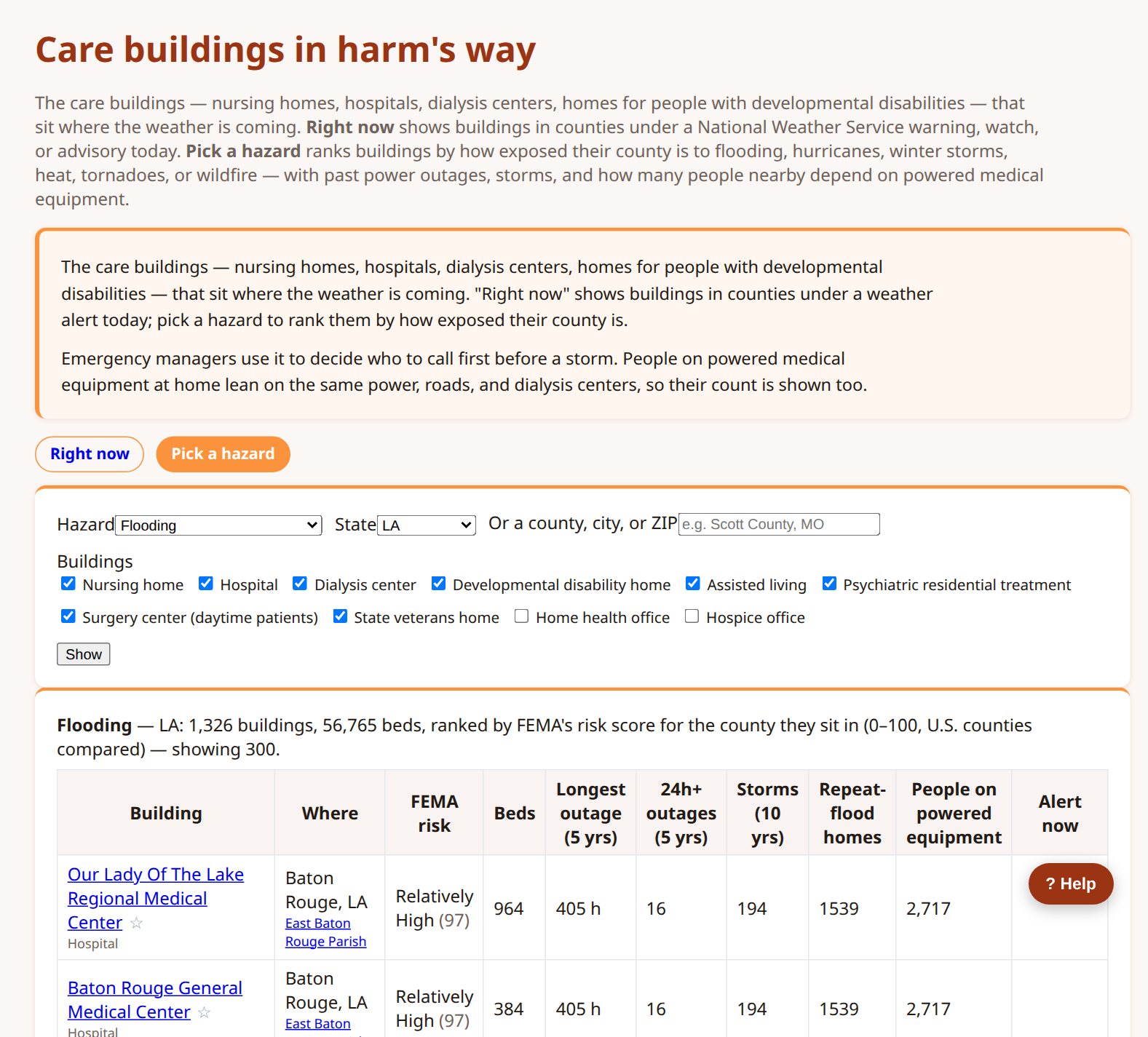
- Care sites in harm's way. Nursing homes, dialysis centers and the hospital in the surge zone, with beds and residents for each.
- Who's exposed. Older adults living alone and households without a car, by area.
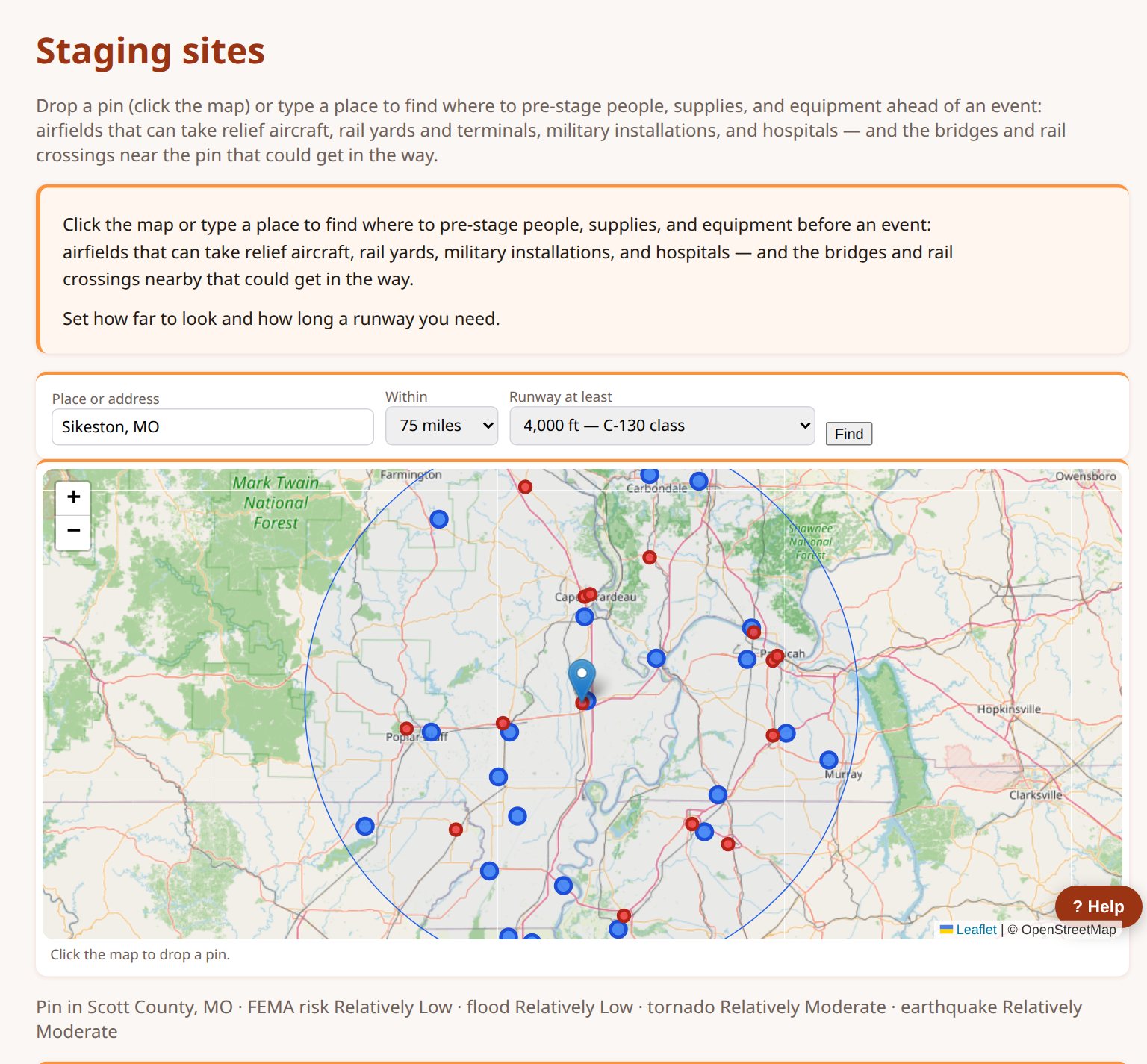
- Staging sites. Large lots and public buildings outside the surge zone, close to the main roads.
- Weather, last 24 hours and During an event. Active warnings by county while the storm passes.
- Area study. A one-page picture of the damaged area for the state and FEMA request.
During the event
The call list runs dialysis patients first, because they can't miss treatment.
Why it matters
Lists that usually take a day of phone calls to build already exist when the storm comes.
See it with real data: the free Polk County, Iowa sample, or what's inside each desk. Every plan starts with a 7-day trial.
The people, places and numbers in these stories are made up to show how the pages work. The pages and the public data behind them are real.
Next case study: Should we open a home health branch here? →